
Older homes in Orlando can offer the front porch, established streets and individual character that make a home search exciting. But a beautiful kitchen does not tell you the age of the roof, the condition of the plumbing or whether an addition was permitted.
The short answer: before committing to an older Orlando home, investigate the roof, major systems, insurance, drainage, permit history, renovation restrictions and your full repair budget. Begin gathering records before an offer when possible, then complete inspections within the deadlines in your signed contract.
Have a home in mind? Text HOME to Daniel Wilson at 407-808-9931 with the listing address and your moving timeline. Let’s discuss the questions to ask before you commit. Prefer a form? Request an Orlando homebuying consultation.
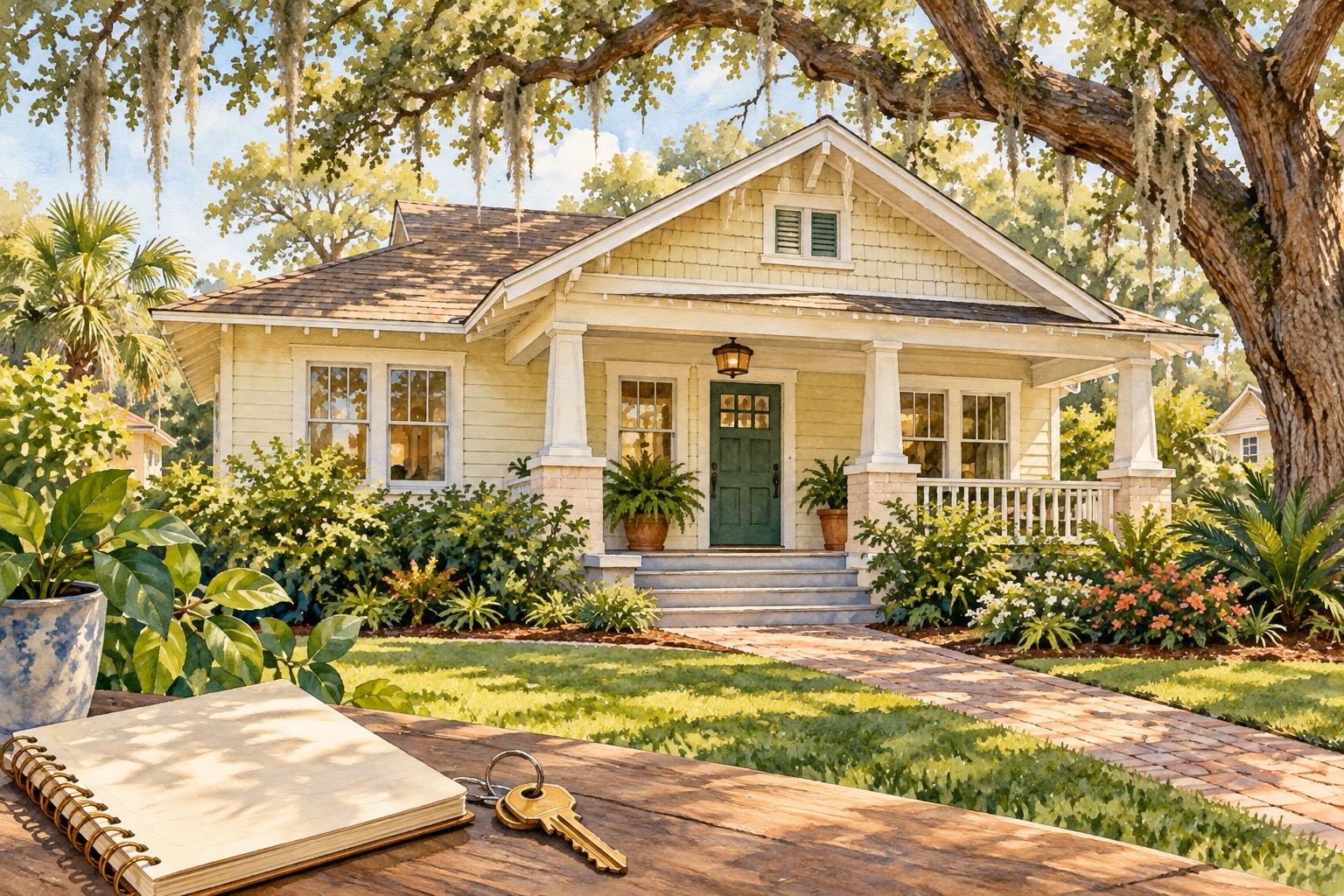
Why older homes in Orlando need a property-specific plan
If you are exploring College Park or Mills 50 and Colonialtown, compare each house on its own records and condition. Two homes on the same street may have very different maintenance histories.
Neither an older construction date nor a recent renovation tells the whole story. A well-documented update can be useful. A freshly painted room with unanswered questions deserves more investigation. Your goal is not to reject every older house; it is to understand what you are buying.
1. Verify the roof—not just the listing description
Start with documents. Ask for the roof’s installation date, permit information, contractor invoice and any transferable warranty. If the seller describes a “new roof,” clarify whether that means a complete replacement, a partial replacement or repairs.
Then ask your inspector which concerns need a licensed roofer’s evaluation. A buyer should not climb onto a roof to investigate. A professional assessment can help separate routine maintenance from work that could affect your budget or insurance application.
Question to ask: “What records support the roof’s age, and what additional evaluation is recommended?” Keep a missing document on your follow-up list rather than treating a verbal estimate as confirmation.
2. Look beyond the finishes to plumbing, electrical and cooling systems
New countertops do not establish that the pipes, wiring or air-conditioning equipment were replaced. Request a list of system updates with dates and supporting records.
- Plumbing: ask what supply and drain materials are present, what was replaced, and whether the inspector recommends further evaluation or a sewer-line camera inspection.
- Electrical: have a qualified professional assess the panel, visible wiring and safety concerns. Do not assume updated outlets mean the entire electrical system was updated.
- Heating and cooling: request equipment ages, service history and details about any recommended repairs or further testing.
- Other concerns: ask your inspector whether moisture, structural conditions, pests, a pool or other property features warrant separate specialist inspections.
Question to ask: “What did the general inspection cover, what could not be inspected, and which specialists should follow up?” A single report should not be treated as a guarantee about concealed conditions.
3. Check insurance options for older homes in Orlando
Do not build your budget around the seller’s premium. Ask a licensed insurance agent for a quote using the specific address, property details and your coverage needs. Ask about deductibles, exclusions, inspection requirements and any repairs needed for coverage.
The Florida Department of Financial Services explains that insurers may request a four-point inspection for an older home. It addresses the roof, plumbing, electrical and heating/air-conditioning systems. Requirements vary by insurer.
A four-point report serves an insurance purpose; do not assume it replaces your broader purchase inspection. A wind-mitigation inspection is different again: it documents features that may qualify for premium credits. Florida’s wind-mitigation guide explains the documentation process.
Question to ask: “Can this property be insured on the terms I need, what is still subject to review, and what work would be required before coverage begins?” A preliminary estimate is not confirmation that a policy has been issued.
4. Investigate drainage and flood exposure at the address
A home’s distance from the coast is not a substitute for checking its flood exposure. Review the address using the FEMA Flood Map Service Center, ask about known water intrusion or flooding, and discuss the site’s drainage with your inspector.
During a showing, note visible water stains, ground sloping toward the house, and drainage questions to raise. These observations are prompts for professional review—not a diagnosis or a prediction that the home will flood.
Most homeowners insurance does not cover flood damage, according to the National Flood Insurance Program. Discuss separate flood coverage with your insurance agent, even if your lender does not require it.
Question to ask: “What do the maps, available records, seller information and property inspection tell us—and what remains uncertain?”
5. Research permit records for older homes in Orlando
A converted garage, enclosed porch or extra bathroom may be central to a home’s appeal. Before relying on that space, investigate how the work was approved and how the area is represented in property records.
The City of Orlando property-information page provides access to permit status, zoning information and code-enforcement resources. An Orlando mailing address does not automatically mean the property is inside city limits. Confirm the governing municipality or county first, then use that jurisdiction’s records.
Ask the appropriate building department about missing records or unresolved permits. An incomplete online search alone does not prove that work was unauthorized, and an issued permit alone does not answer every question about completion.
Question to ask: “Do the records match the work and intended use, and is there anything the building department or closing professional needs to resolve?”
6. Check renovation rules before buying a project
Planning to replace windows, enlarge the porch or change the exterior? Investigate those plans before pricing the home as if every change is straightforward.
An older house is not automatically a designated historic property. Check the address. The City of Orlando historic-preservation FAQs explain how to investigate designation and review requirements. For a designated property or one in a local historic district, contact city staff about the specific work you are considering.
Also check any applicable association rules, zoning limits and permitting requirements. A contractor’s concept is not the same as an approved project.
Question to ask: “Which approvals would my intended renovation need, and should I confirm feasibility before moving forward?”
7. Budget for repairs when comparing older homes in Orlando
For older homes in Orlando, compare more than the purchase price. Build a written budget with separate lines for:
- Down payment and closing costs.
- Insurance and property taxes for your purchase.
- Immediate repairs supported by professional estimates.
- Near-term replacements and ongoing maintenance.
- A reserve for unexpected work, separate from cosmetic upgrades.
A lower asking price does not necessarily produce a lower total cost. Likewise, a renovated house is not automatically the better value. Compare documented condition, your available cash and the work you are comfortable taking on.
Schedule an independent inspection promptly and leave room for follow-up. The Consumer Financial Protection Bureau’s inspection guidance distinguishes inspections from appraisals and explains why findings can affect a purchase.
Repairs, credits, cancellation rights and deadlines depend on your agreement. Do not assume a seller must repair every issue or that an “as is” purchase gives you unlimited time to decide. Review the contract with your agent and, for legal advice, a Florida real-estate attorney.
A simple checklist for your next showing
Save these five questions on your phone:
- What is known about the roof and major systems?
- Which updates have supporting records?
- What inspections and insurance information are still needed?
- Can the home support my intended use or renovation?
- What must be resolved before my contract deadlines?
If you also need help understanding the sequence, review our Orlando home buying timeline.
Questions buyers ask about older homes in Orlando
Is buying an older home a bad idea?
Not automatically. The decision depends on the specific property’s condition, documentation, insurance options and your budget. Age alone does not establish whether a house is a good purchase for you.
Does a renovated home still need an inspection?
Yes—renovation photos do not answer every question about the home. Arrange an independent inspection and appropriate follow-up, and review the records for completed work.
Should I ask for repairs or a price reduction?
First identify the issue, obtain qualified advice and understand your contract. The right request depends on the findings, financing, insurance requirements and both parties’ agreement. A credit may not solve a repair required before closing.
Let’s build your Orlando home search around the right questions
I’m Daniel Wilson, REALTOR®, with Top Orlando Living and RE/MAX Town Centre. If you are comparing older homes in Orlando, send me the address or neighborhood, your target budget and when you hope to move.
We can discuss your search priorities, the information to request and the next steps for a property you are considering. Inspectors, insurance professionals and other qualified specialists provide their own assessments.
Text HOME to 407-808-9931 · Call Daniel · Request a homebuying consultation
Already working with a real-estate agent? Coordinate your search and transaction questions with your existing representative.
Published October 7, 2026. General educational information, not a property inspection or legal, insurance, tax or engineering advice. Confirm property conditions, contract rights, current requirements and costs with the appropriate professionals.
