
College Park corner lots offer a particular buying decision: you are choosing how a home meets two streets. A wide-looking lawn may not be the private yard you imagined, while a side-facing garage might fit your routine beautifully. Use these seven checks to compare the actual parcel rather than the word “corner” in a listing.
Comparing specific homes? Send Daniel Wilson your corner-lot brief with two listing links, your comfortable price range, move month and one priority. Call 407-808-9931 if you prefer to talk. Keep private financial documents out of your initial message.
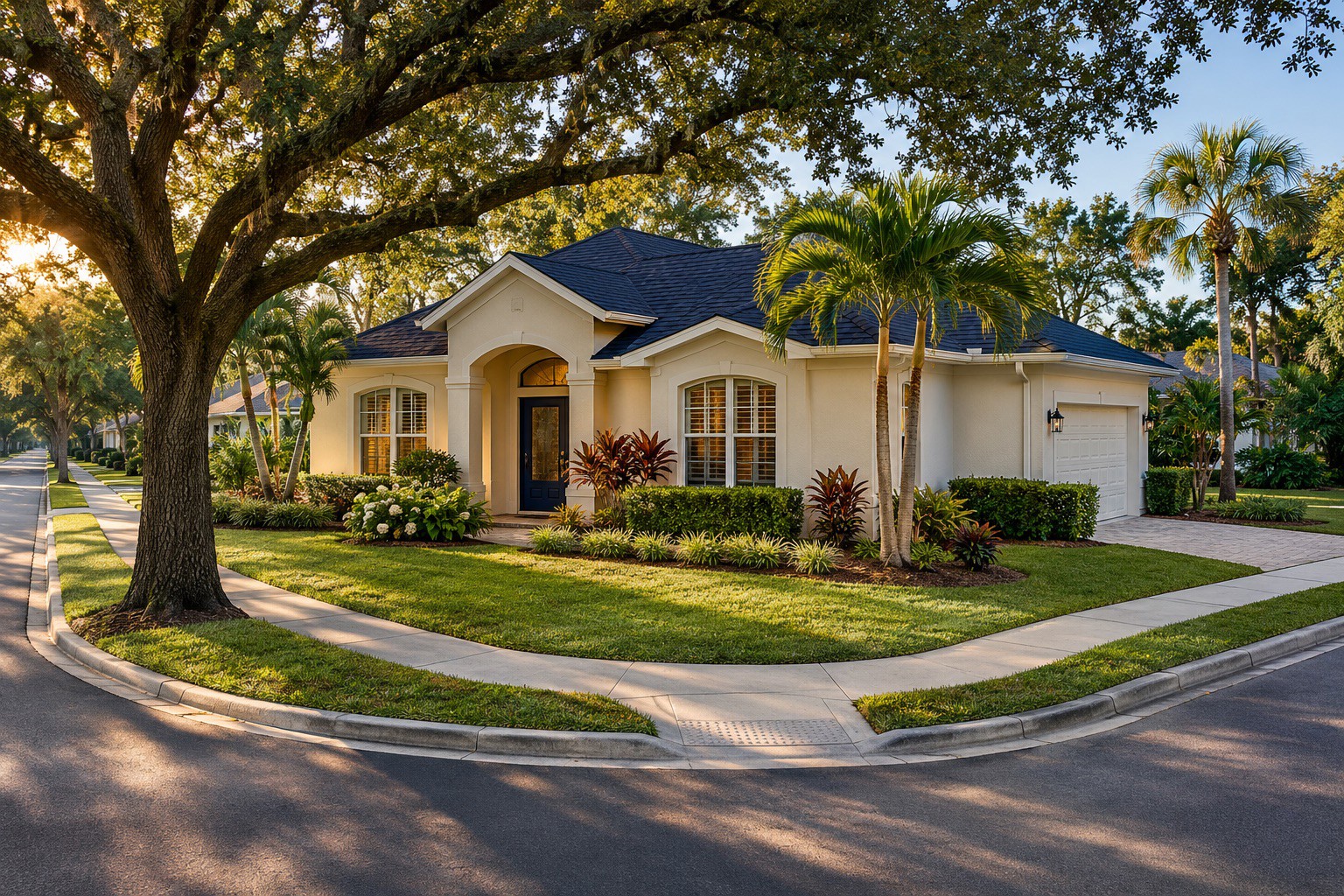
1. Give each street edge a separate job
On a simple sketch, label Street A, Street B, the front door, driveway, outdoor sitting area and bedroom windows. Describe the role of each edge: arrival, outlook, vehicle entry or privacy. This prevents a large lawn from receiving credit twice when much of it is visible from public space.
Identify the parcel and confirm jurisdiction with the City of Orlando address tool. College Park and the 32804 ZIP code are different boundaries. A listing neighborhood name does not settle which office interprets the rules for the property.
2. Test arrival from both directions
When touring College Park corner lots, approach as you would after work, then leave toward a regular destination. Record the turns, the driveway angle and what you can see from the driver’s position. Visit at a second relevant time when practical. A quiet showing is one observation, not evidence about every evening.
With permission, check whether your actual vehicle fits without blocking the sidewalk. Notice where visitors would arrive and where deliveries could wait. Do not test private neighboring drives or treat curb space as owned parking.
3. Check privacy before designing a fence
Stand in the proposed outdoor sitting area and notice views from both streets. Repeat inside the rooms where privacy matters to you. Distinguish an existing feature from a future solution: curtains are present; a taller fence may be an unconfirmed idea.
The city’s fence guide explains that corners and driveways have visibility restrictions and that the applicable rules vary. Ask planning staff about your sketch before making a purchase depend on a fence height or position.
4. Measure usable yard on College Park corner lots
For College Park corner lots, total land area is only the starting point. Mark the space that could serve your priority: gardening, an outdoor table, recreation or simply low-maintenance planting. Leave boundaries, easements and buildable areas for documentary and professional confirmation.
Do not measure from a sidewalk or hedge and assume you have found the property line. Request an appropriate survey and ask the surveyor and title professional about unclear boundaries or easements. A visually open strip is not automatically available for a pool, addition or new driveway.
5. Make a two-frontage upkeep list
Walk the accessible public edges without entering restricted areas. Note existing planting, irrigation, drainage inlets, pavement transitions and any tree questions. Photograph only with permission where required. Record observations without diagnosing damage or claiming responsibility for public infrastructure.
Ask the seller what they maintain, what service arrangements exist and what records support that account. Then check unclear responsibilities with the relevant authority or professional. Compare the ongoing tasks with your willingness to manage them, rather than assuming a corner lot always costs more or less.
6. Check proposed changes on College Park corner lots
For College Park corner lots, write one sentence for each proposed change: “I want to widen this drive,” or “I need screened outdoor space here.” The residential permitting checklist shows why a site plan needs more than a rough yard size: streets, easements, existing improvements and trees all matter.
Use the property-information directory to locate zoning and permit resources. A permit search does not establish current condition, and a missing result is a question for the permitting office, not proof of wrongdoing.
7. Use a corner-lot decision sheet
Compare College Park corner lots with the same four rows. For every unknown, name the person who can resolve it and decide whether the answer matters before an offer or during an agreed review process. Work with your agent and attorney on appropriate contract protections; this worksheet does not create them.
Choose “fits now,” “fits after verified work,” or “does not fit my priority.” Do not average away a critical problem because the home earns points for attractive finishes. If an essential privacy or parking plan remains unconfirmed, keep that uncertainty visible.
College Park corner lots: your two-street worksheet
| Question | Home A / Home B notes | Evidence or next owner |
|---|---|---|
| Arrival and parking | Actual vehicle fit; turns; visitor plan | Observed visit; survey or city follow-up |
| Private outdoor area | Existing usable space versus proposed changes | Surveyor, planning staff, contractor |
| Two street edges | Views, planting and recurring upkeep | Seller records; qualified specialist |
| Decision | Fits now / conditional / does not fit | Name unresolved item and next step |
Questions about College Park corner lots
Does a corner lot mean I can add a second driveway?
No. Existing frontage is not approval for a new access point. Ask the relevant permitting and engineering staff about the particular parcel and proposed location before treating it as part of your buying plan.
Can I assume the fence marks the property boundary?
No. A fence is an observation. Have an appropriate survey and title review address the boundary and recorded rights; ask the relevant professional to explain any mismatch.
Are College Park corner lots automatically a better purchase?
No. Their usefulness depends on the two street edges, current layout, verified options and your priorities. Compare specific properties and supporting evidence rather than treating the lot label as a value guarantee.
Turn your notes into a focused next step. Request a corner-lot brief review with Daniel Wilson and include two listing links, your comfortable price range, move month and one priority. We can organize the property-specific questions and decide which homes deserve a closer look. Or call 407-808-9931.
Daniel Wilson | Top Orlando Living | RE/MAX Town Centre
General buyer-planning information, not a survey, inspection, appraisal, legal opinion, lending decision or assurance of future approvals. Confirm technical, legal and financial questions with the relevant qualified professional.
Official resources checked November 16, 2026. Requirements and site conditions can change; recheck the exact address and proposed use.
