
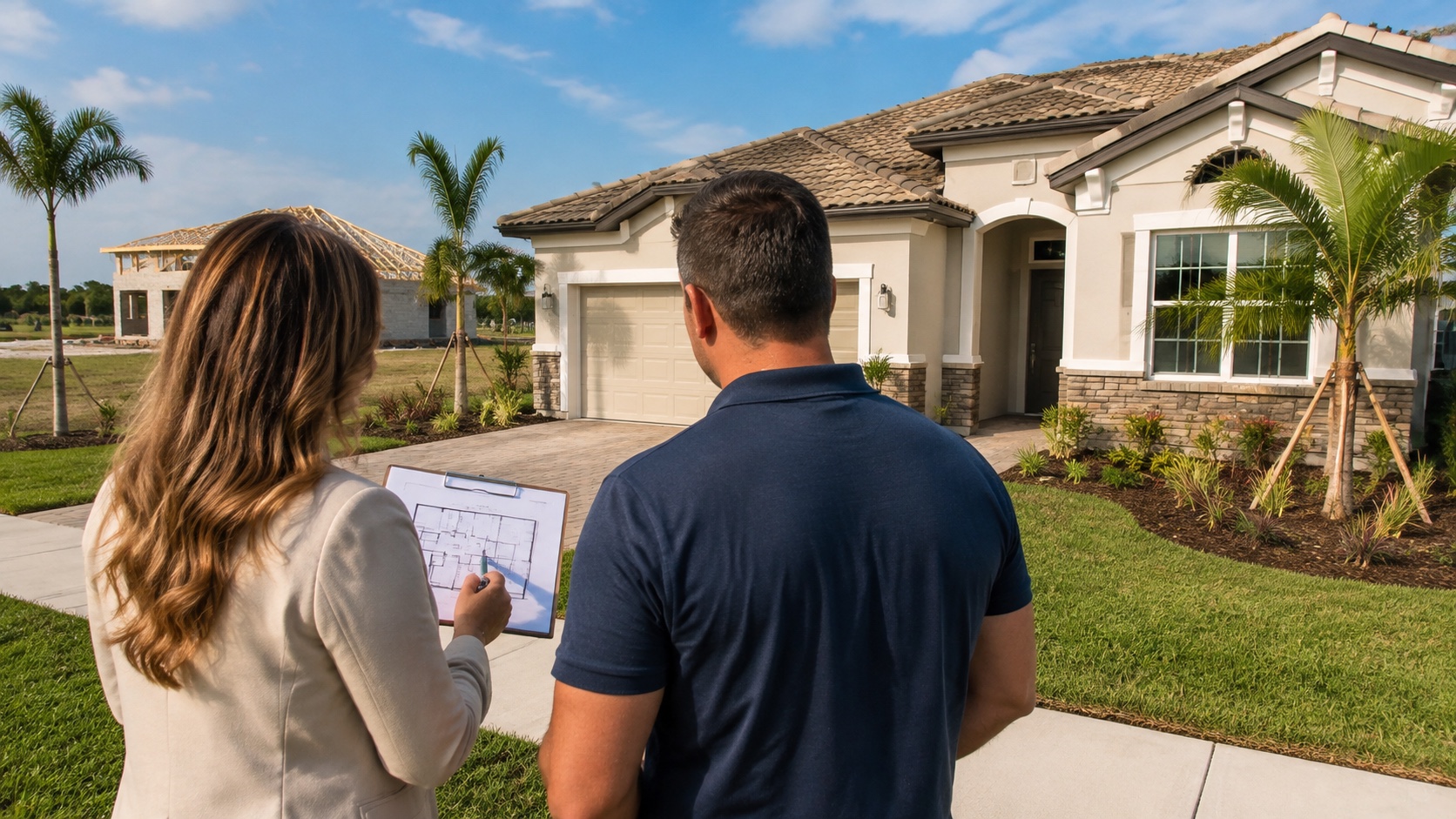
Buying new construction in Orlando can be exciting: a fresh home, modern layout, current building standards and the opportunity to select finishes. It can also become unexpectedly expensive when the advertised base price does not include the lot, structural options, design selections, financing costs, association expenses or the upgrades shown in the model.
The builder’s sales team can explain its homes and communities, but buyers should not assume they are receiving independent representation. The sales professionals at the model center work within the builder’s sales process and policies. Your own real-estate agent can help you compare communities, analyze the complete price, review resale considerations and coordinate inspections and closing—subject to your representation agreement and the builder’s rules.
Before you visit an Orlando model home
Contact your buyer’s agent before registering online, entering a sales center or touring a model. Builder policies vary, and some require the buyer’s agent to register or accompany the buyer at the first interaction.
Text “NEW BUILD” to (407) 808-9931 with your budget and preferred area. Daniel Wilson will help you identify communities and prepare questions before you visit.
Is buying a new-construction home in Orlando worth it?
It may be worthwhile when the home, location, complete monthly cost and timeline fit your plans. New construction can offer newer systems, builder warranties, energy-efficient features, contemporary floor plans and fewer immediate renovation needs. Builders may also advertise financing or closing-cost incentives on selected homes.
The tradeoffs can include construction delays, limited leverage in the builder contract, additional costs for options, developing-community conditions, landscaping or window-treatment expenses, and taxes or district assessments that are higher than the initial estimate.
Current financing also makes careful comparison essential. Freddie Mac reported that the national average 30-year fixed mortgage rate was 6.71% on September 3, 2026. Your rate will depend on the lender, loan, credit, down payment, points, property and timing. A builder-advertised rate may apply only to a particular home, lender, closing date or borrower profile.
Orlando’s broader market gives buyers context—not a builder-specific answer
The Orlando Regional REALTOR® Association reported 12,043 homes in inventory and 4.4 months of supply in July 2026. Homes spent an average of 64 days on the market, and 68% of surveyed local REALTORS® reported seeing more seller concessions than one year earlier.
Those figures cover the broader regional resale market and do not describe every builder or community. They do show why new-construction shoppers should compare builder offerings with resale alternatives. A builder incentive may be attractive, but a nearby resale could offer a better lot, completed improvements, mature landscaping or a lower total ownership cost.
12 costly mistakes Orlando new-construction buyers should avoid
1. Visiting the builder before speaking with your own agent
Many buyers begin casually: they click an advertisement, submit a form or walk into a model home. That first interaction can affect whether and how an outside agent may participate under the builder’s policy.
Contact your agent first. Discuss the agent’s role, services and compensation in writing, then confirm the registration process for every builder you intend to visit. The builder’s policy—not an assumption made after the visit—will control its registration requirements.
2. Treating the advertised base price as the final price
The base price usually reflects a particular floor plan with standard features on a standard homesite. The completed price may also include:
- Homesite or lot premium
- Elevation or exterior-style premium
- Structural options and room changes
- Design-center selections
- Appliance and technology packages
- Pool, patio or outdoor-living additions
- Landscaping, fencing and window treatments
- Closing expenses and prepaid items
Ask for an itemized price showing the base home, lot, structural choices, design options, incentives and total contract price. If you are touring a model, request a list separating standard features from displayed upgrades.
3. Assuming the model home represents the standard product
Model homes are designed to create an emotional response. They may feature premium flooring, taller cabinets, expanded rooms, custom lighting, upgraded landscaping, decorator treatments and structural options not included in the advertised price.
Walk through the model with the builder’s included-feature list. Ask which selections are standard, which are upgrades, and whether the same items are available for your floor plan. Photographing or documenting selections may help, but the signed contract and addenda determine what the builder must deliver.
4. Choosing an incentive without calculating its complete cost
A builder may offer a rate buydown, closing-cost credit, design allowance or price reduction—often with conditions involving a preferred lender, title provider, particular inventory home or closing deadline.
The largest advertised credit is not automatically the best financial choice. The Consumer Financial Protection Bureau recommends comparing Loan Estimates, including:
- Interest rate and whether it is locked
- Discount points
- Origination charges
- Lender credits
- Mortgage insurance
- Estimated cash to close
- Total monthly payment
- Five-year cost of borrowing
A credit can reduce the amount due at closing while being paired with a higher rate or different fees. Request comparable written scenarios from the preferred lender and at least one outside lender, using the same loan type, down payment, lock period and closing date. Use our guide to compare Orlando builder incentives to organize the written offers.
5. Shopping by mortgage payment alone
A quoted principal-and-interest payment does not show the complete housing expense. Build an all-in monthly estimate that includes:
- Principal and interest
- Property taxes
- Homeowners and flood insurance
- Mortgage insurance when applicable
- HOA fees
- Community Development District assessments
- Utilities and routine maintenance
Also determine how much cash you will need for the deposit, design selections, closing, moving and post-closing purchases. A new house may still need blinds, fans, appliances, storage systems, fencing, landscaping or other items shortly after move-in.
6. Estimating future property taxes from a current land-only bill
This is one of the most important budgeting issues for Florida new-construction buyers. A current tax record may reflect vacant land, incomplete construction or a prior assessed value. It may not represent the tax bill after the completed home is assessed.
Florida property is assessed as of January 1, and ownership, completion timing, exemptions and assessed value can affect future bills. If the property will be your permanent residence, you may be eligible to apply for a homestead exemption, but eligibility and amounts are determined by the county property appraiser.
Use a purchase-price-based estimate from the appropriate county property appraiser or tax professional. Ask the lender how the projected tax amount was calculated, and maintain a cushion in case the initial escrow collection is adjusted.
7. Overlooking HOA and CDD obligations
Many Orlando-area new-home communities have homeowners associations, and some are located within Community Development Districts or other special districts. These obligations can support roads, utilities, landscaping, amenities and community services, but they affect affordability.
Before signing, request and review:
- Current HOA fees and what they cover
- Community rules and architectural restrictions
- CDD or other district assessments
- Whether assessments appear on the property-tax bill or separately
- Available district budgets, debt information and meeting records
- Anticipated amenity completion and access
FloridaCommerce maintains an official list of special districts and links to district information. Verify the specific property rather than relying only on a marketing estimate.
8. Delaying insurance and flood research
A new roof and current systems may help with insurance, but a new home is not automatically inexpensive to insure. Location, replacement cost, construction features, wind coverage, deductibles and insurer underwriting all matter.
Request property-specific quotes early enough to affect your decision. Review the wind-mitigation documentation, proposed coverage, deductibles and exclusions. Check the property through FEMA’s official Flood Map Service Center and consider flood risk beyond the lender’s minimum requirement.
9. Relying only on builder and municipal inspections
New does not mean perfect. Construction involves many trades, materials and stages, and defects can occur even with a reputable builder.
Ask whether the contract and construction schedule permit independent inspections. Depending on timing, buyers may consider:
- Pre-drywall inspection before walls conceal major components
- Final inspection before the orientation or closing
- Reinspection of agreed corrections
- Warranty inspection before an important builder-warranty deadline
Use an appropriately licensed and insured Florida home inspector. The Florida Department of Business and Professional Regulation provides an online license-verification tool. An independent inspection does not change the contract automatically; buyers must follow the contract’s notice, access and repair procedures.
10. Signing the builder contract without understanding the differences
A builder contract may differ significantly from a standard resale form. It is normally drafted for the builder’s transaction and may address:
- Deposit deadlines and refundability
- Financing and appraisal provisions
- Construction and closing-date flexibility
- Material or design substitutions
- Change-order procedures and costs
- Buyer access to the construction site
- Inspection and correction procedures
- Default remedies and dispute provisions
- Warranty coverage and exclusions
- Association and community disclosures
Read every document before signing. A real-estate agent can help identify practical questions, but only a qualified attorney can provide legal advice or interpret your contractual rights.
11. Assuming the closing date will not move
Weather, permits, labor, materials, inspections, utilities and lender conditions can affect construction. Some contracts give the builder substantial flexibility concerning completion and closing.
A delay can create costs involving rent, storage, temporary housing, movers or rate-lock extensions. Before signing:
- Ask how the builder communicates schedule changes.
- Review the contractual closing provisions.
- Discuss rate-lock timing and extension costs with the lender.
- Avoid giving irreversible move-out notice too early.
- Keep enough financial flexibility for reasonable changes.
A projected date is useful for planning, but the contract defines the parties’ obligations.
12. Ignoring resale value because the home is new
You may eventually compete with future builder inventory and other nearly new homes. Consider the property as both a residence and a future resale.
Evaluate:
- Location within the community
- Road noise, power lines, drainage and nearby land uses
- Lot size, orientation, view and privacy
- Floor-plan usefulness for future buyers
- School, employment and transportation access without relying on rankings or guarantees
- Planned phases and future construction
- Recurring HOA and district costs
- How expensive upgrades compare with neighborhood resale limits
The most upgraded home on a less desirable lot may not outperform a thoughtfully selected home with fewer cosmetic options.
Quick move-in home or build from the ground up?
Quick move-in homes are already under construction or complete. They can offer a shorter timeline, a known homesite and fewer design decisions. Builders may place stronger incentives on selected inventory, but the buyer may have limited ability to change finishes.
To-be-built homes provide more selection and customization, but they usually involve a longer timeline, additional deposits and more exposure to construction or financing changes. Design-center choices can also move the final price well above the starting figure.
Compare the final written price and complete monthly cost of both options. Do not compare an upgraded inventory home with the base price of a to-be-built home.
New construction versus a resale home in Orlando
A fair comparison should include more than age.
New-construction considerations
- New systems and possible builder warranties
- Modern layouts and energy features
- Possible builder financing or closing incentives
- Choice of homesite, plan and finishes when available
- Potential construction delays and developing-community conditions
- Added costs for upgrades and post-closing necessities
Resale-home considerations
- Established neighborhood and mature landscaping
- Actual property-tax and utility history for reference
- Existing improvements such as blinds, fencing, pool or storage
- Potential for a shorter and more predictable closing
- Possible repair, renovation or insurance concerns
- Negotiation based on the individual seller and property
Your agent can prepare side-by-side options in areas such as Lake Nona, Horizon West, Winter Garden, Clermont, Kissimmee, Apopka and other Central Florida communities. Start with Top Orlando Living’s Orlando neighborhood guide.
A safer Orlando new-construction buying process
- Define the complete budget. Establish comfortable cash-to-close and all-in monthly limits.
- Choose your representation before touring. Discuss services, compensation and builder registration procedures.
- Get financing guidance. Obtain preapproval and prepare to compare the builder’s preferred lender with alternatives.
- Compare communities and resale homes. Consider location, taxes, insurance, HOA, district costs and future competition.
- Price the complete home. Add the lot, elevation, structure, design options and expected post-closing items.
- Review the contract and disclosures. Ask questions and obtain legal advice when needed before signing.
- Track financing and construction. Monitor documents, deadlines, rate locks and schedule changes.
- Arrange permitted independent inspections. Coordinate them with the builder’s access and notice requirements.
- Review final costs and property information. Verify taxes, insurance, association obligations and cash to close.
- Complete orientation, punch list and closing. Document concerns and follow the required correction process.
- Organize warranty records. Save contracts, plans, selections, inspections, manuals and service contacts.
Start your Orlando new-construction search correctly
Do not wait until after you register at a model center to ask for help. Daniel Wilson can help you compare builders, new communities and resale alternatives while keeping your complete budget and future plans in view.
Text “NEW BUILD” to (407) 808-9931 with your preferred area, budget and moving date, or request an Orlando buyer consultation online.
Daniel Wilson, REALTOR® | GKC, MBA
Top Orlando Living at RE/MAX Town Centre
701 E. Washington St., Orlando, FL 32801
Call or text: (407) 808-9931
Email: Daniel@TopOrlandoLiving.com
Frequently asked questions about Orlando new construction
Do I need a real-estate agent when buying from an Orlando builder?
You are not required to use an agent in every transaction, but the builder’s sales representative should not be assumed to provide independent buyer representation. Your own agent can help compare communities, prices, incentives, resale alternatives and transaction details. Discuss representation and compensation before touring.
Will using a buyer’s agent increase the builder’s price?
Builder pricing, incentives, registration and broker-compensation policies vary. Do not assume the price will increase or decrease. Ask your agent to verify the builder’s current written policy before your first interaction.
Can an Orlando builder pay closing costs?
Builders may offer credits on selected homes or financing programs, often with conditions. Compare the complete price, interest rate, points, fees, monthly payment and cash to close—not the credit alone.
Should I inspect a brand-new home?
An independent inspection can identify incomplete or defective work. Ask what inspections the contract and construction schedule permit, use an appropriately licensed inspector and follow the builder’s access and notice procedures.
Are property taxes lower on a new-construction home?
Not necessarily. A current bill may reflect vacant land or incomplete construction. Estimate taxes using the completed home and anticipated value, then verify the methodology with the county property appraiser, lender or tax professional.
Which Orlando areas have new homes?
Availability changes continually, but buyers often find new construction across Orange, Osceola, Lake, Seminole and surrounding counties. Search by complete budget, commute, community costs and property needs rather than choosing from an area name alone.
Sources and important information
- Orlando Regional REALTOR® Association: July 2026 Housing Market Narrative
- Freddie Mac: Primary Mortgage Market Survey
- Consumer Financial Protection Bureau: Compare Loan Estimates
- Florida Department of Revenue: Property-Tax Information for Florida Homebuyers
- Florida DBPR: Verify a Professional License
- FloridaCommerce: Special District Accountability Program
- FEMA Flood Map Service Center
Market figures and public information were reviewed on September 7, 2026, and may change. Builder prices, incentives, availability, policies, contracts and timelines vary. This article provides general information and is not legal, tax, lending, insurance, engineering or inspection advice. Verify property-specific information with qualified professionals. Equal Housing Opportunity.
